
By Teresia Gitau
Nairobi, Kenya — Despite having a strong background in mathematics and a degree in environmental science, I once avoided data-driven environmental stories. When I transitioned to journalism, my training came mostly from media associations, and I learned the basics of data journalism on YouTube. But challenges remained: Where could I find verifiable data on environmental issues in Africa? Which tools could I use to visually tell climate stories?
I had a pool of story ideas, but inadequate data and the fear of the unknown held me back. The stories went untold.
My experience reflects a wider challenge across African newsrooms. Juliet Akoth, a freelance health and environmental journalist, shares similar struggles:
“Finding the data is not the problem. But cleaning it, analyzing it, and expressing it through infographics or tools like Data Wrapper—that knowledge gap is real.”
A 2023 study of Kenyan media houses published in the International Journal of Professional Practice found that only 5% of journalists received specialized training in-depth climate reporting. While 51% had some training on climate change, 49% had none.
Most data journalism training happens informally—through media associations or refresher courses. Few African journalism schools offer specialized data courses, leaving many reporters to learn on the job.
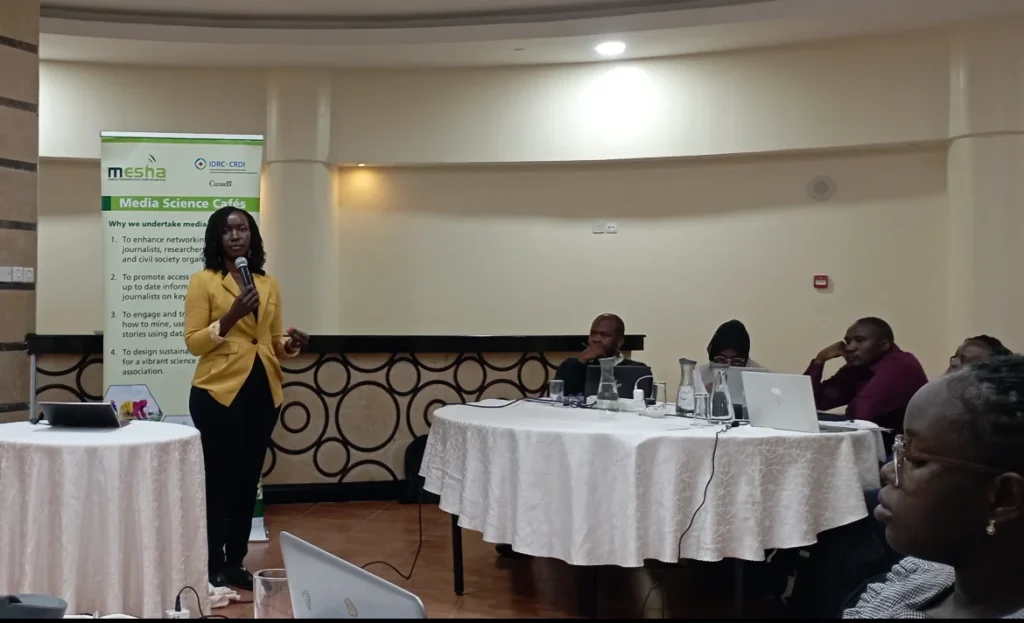
This gap translates into limited data-driven climate coverage. “When I started, journalists focused on narrative stories, and graphic designers handled visuals,” says Kevine Omollo from Lake Region Bulletin. Data journalism was seen as too technical, requiring strong math skills.
But Malemba Mkongo, editor at People’s Daily Newspaper and data journalism facilitator at MESHA (Media for Environment, Science, Health, and Agriculture), says this mindset holds many back:
“Data journalism is about being a critical thinker—mining, cleaning, interpreting data, and combining it with journalism skills to create compelling visuals.”
Even with skills, journalists face hurdles: researchers can be hard to reach, and reliable climate data in Africa is still emerging.
Despite challenges, there are bright spots. In Kisumu, a youth-led initiative called EcoData Labs is training young environmental reporters to use open-source data tools to track local water pollution and deforestation. Founder Amina Otieno explains,
“By empowering youth with data skills, we enable them to tell stories that hold polluters accountable and engage communities in conservation.”
Since its launch, EcoData Labs trainees have produced over 20 data-driven climate stories picked up by regional news outlets, sparking local government action to clean polluted rivers. This grassroots success shows how data journalism can amplify youth voices and drive real change—key pillars of SECOTO MAGAZINE’s mission.
To expand this impact, training should start early—integrated into college curricula and sustained in newsrooms. Juliet Akoth emphasizes,
“Workshops provide valuable networking and introduce new tools, but ongoing mentorship is vital.”
Moreover, in an age of rampant misinformation, fact-checking skills are critical. Journalists need training to verify data sources and ensure trustworthy climate reporting, reinforcing the credibility SECOTO MAGAZINE strives for.
Closing the data skills gap requires collaboration among media houses, training institutions, and climate activists. Youth-led initiatives like EcoData Labs show the power of innovation and community engagement. With investment in training and mentorship, Africa’s journalists can tell richer, data-driven climate stories—from villages to global platforms—fueling informed action for our planet’s future.