


By Jean de Dieu NDUWAYEZU
On July 28th, 2025, the sun set over Kigali not just on a day but on an era of waiting. As twilight blanketed the hills of Rwanda’s capital, lights came to life at the heart of Kigali Sports City, illuminating more than architecture. Zaria Court, a bold and visionary space, was unveiled as a continent-facing declaration: that Africa’s future will be shaped by its youth and built by its own hands.
Presided over by President Paul Kagame and Masai Ujiri, Founder & CEO of the Zaria Group and Co-Founder of Giants of Africa, the inauguration was not just a ceremonial event it was a moment defined by purpose, precision, and promise with every detail echoing the ambition of a continent on the rise.
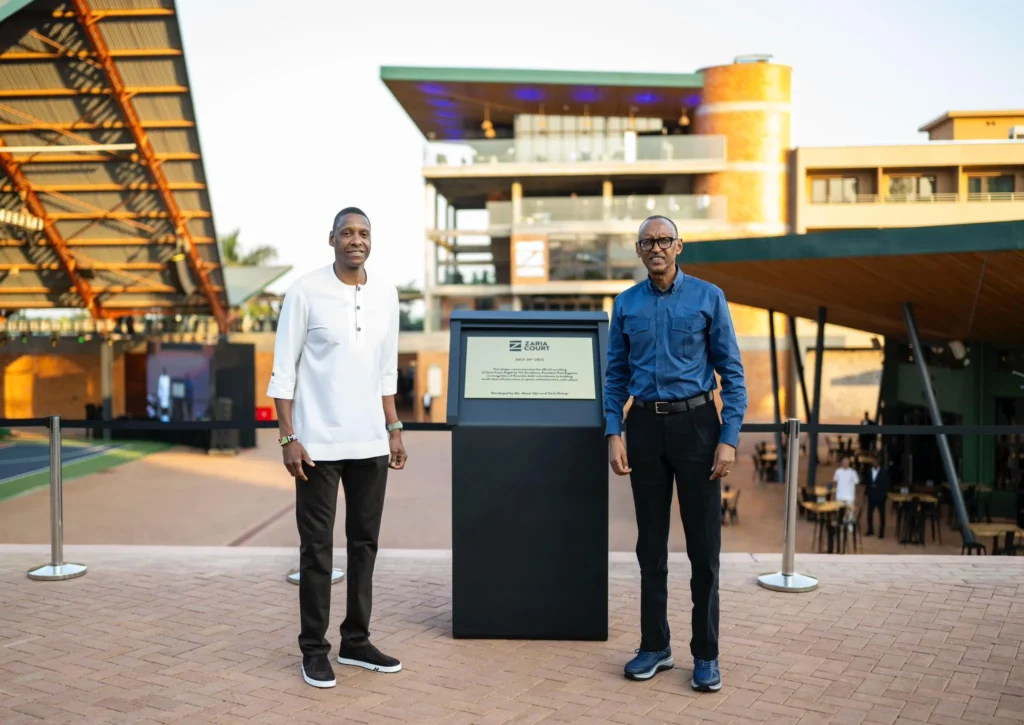
Former NBA Champion Festus Ezeli took the role of Master of Ceremonies, bridging legacy and aspiration through his own story of perseverance and triumph. The guest list reflected continental alignment: Africa’s leading business magnate Aliko Dangote, Basketball Africa League President Amadou Gallo Fall, NBA Africa CEO Clare Akamanzi, Secretary-General of La Francophonie Louise Mushikiwabo, Rwanda’s Minister of Sports Nelly Mukazayire, and Andrew Feinstein of Zaria Group RDB’CEO Jean-Guy Afrika. Their presence reinforced one message: the time to invest in Africa’s youth is now.
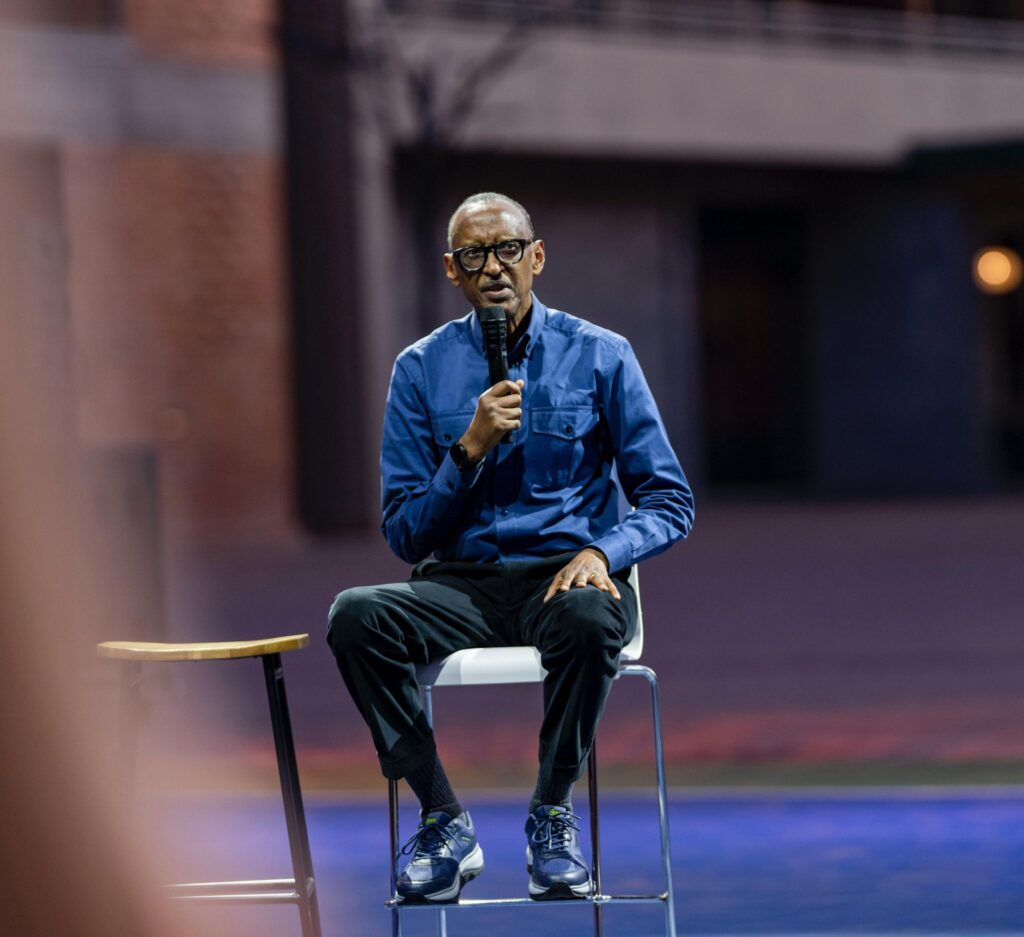
President Kagame, in his remarks, shared a personal reflection:
“I wasn’t a professional athlete, nor a businessman, but I’ve always believed I could do something create the right environment for others to succeed.”
Those words capture the essence of Zaria Court. It’s more than infrastructure it is an ecosystem for potential. A space designed to nurture the next generation of thinkers, leaders, and creators. A place where confidence is built, where ideas are born, and where identity is celebrated.
For Masai Ujiri, Zaria Court is a continuation of a mission he has carried for years building world-class spaces in Africa, for Africans.
“When you talk about vision, leadership, and bringing people together, that’s President Kagame.” Masai Ujiri during the launch of Zaria Court Kigali, a new sports and culture hub.
He has often spoken of the need for African youth to feel pride in the environments that shape them, to see excellence not as an import, but as an expectation. In Zaria Court, that belief becomes tangible a place where ambition is not only welcomed, but structured, supported, and scaled.
The space stands as a challenge to other African cities: to imagine and to act. It shows what is possible when bold vision meets political will, when global partnerships meet local ownership. It reminds us that investment in infrastructure is also an investment in dignity in showing young people that they matter enough to have access to the very best.
As Kigali continues to position itself as a hub for innovation and cultural renaissance, Zaria Court adds a new dimension. It becomes a beacon for collaboration, growth, and reinvention an answer to the question: “What does it look like when Africa builds for itself?”
And to the young Africans who will walk into Zaria Court not as visitors, but as owners of tomorrow the message is clear:
“You are not being prepared for the world.You are preparing the world for you.”
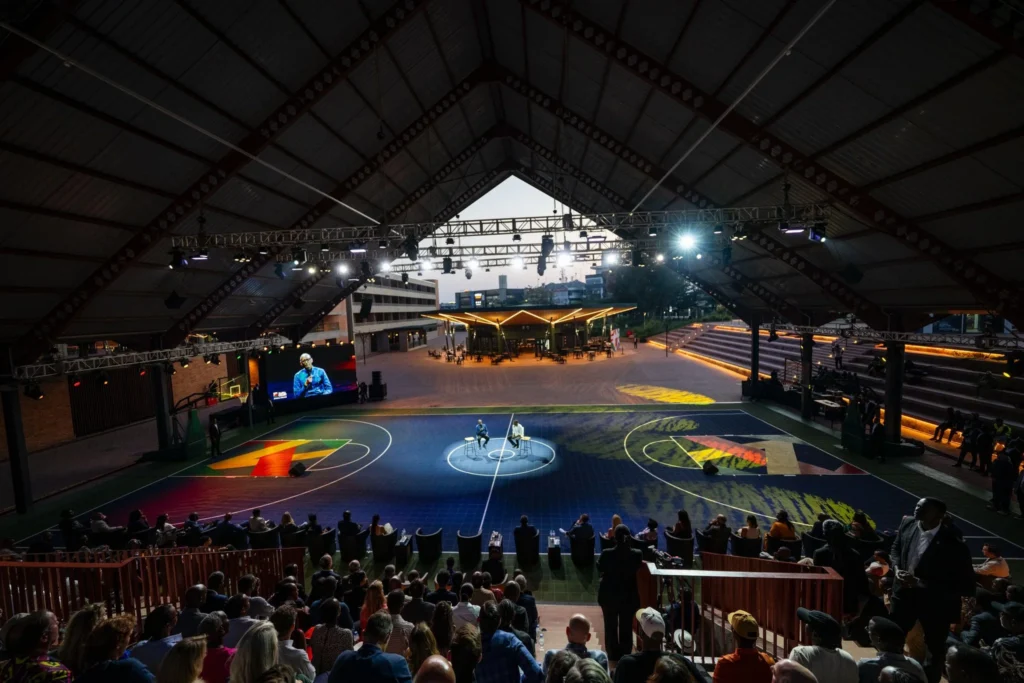
Zaria Court is now open not as a monument to power, but as an invitation to possibility. Its very foundation speaks of purpose. Built with more than 90% locally sourced materials, it is proof that African hands and minds can deliver excellence at scale. Strategically located beside BK Arena and other flagship developments, Zaria Court is positioned to become a hub for youth summits, business labs, creative industries, and sporting tournaments. It is more than a venue it is a platform. A launchpad for talent. A living example of intentional, African-led development.
Zaria Court is not simply a building. It is a philosophy cast in concrete. A hub where sport, culture, innovation, and entrepreneurship converge under one roof, offering young Africans not just a place to gather—but a place to lead.
The vision began in August 2023, when President Kagame and Masai Ujiri laid the first stone. Two years later, it stands complete—an achievement realized through local skill, materials, and unwavering commitment.
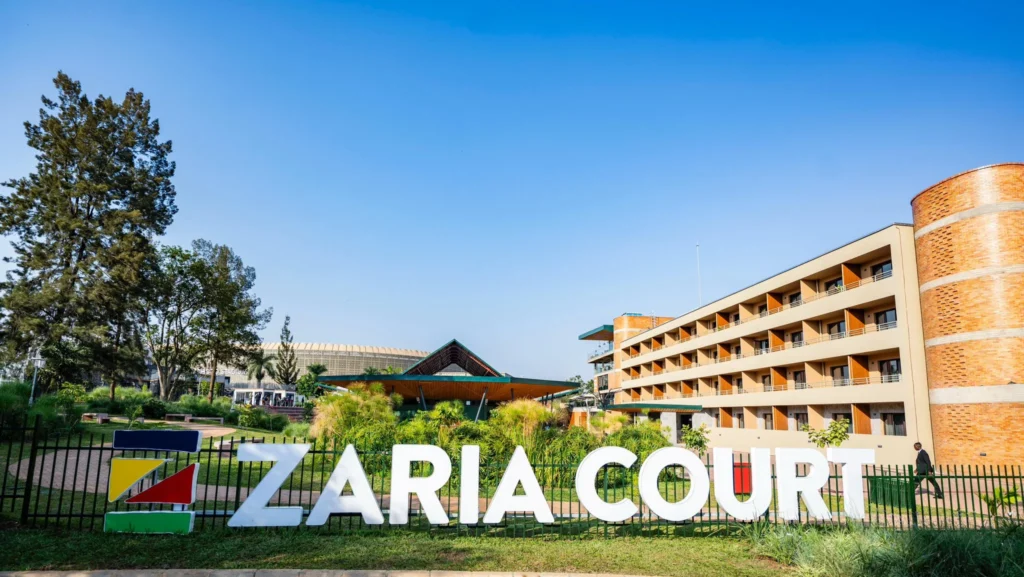
The $25 million project was entirely financed through private sector partnerships, employing more than 300 Rwandans during its construction. It is now positioned to generate sustained value through tourism, business incubation, education, and global event hosting.
Zaria Court’s story is just beginning. What it symbolizes goes far beyond concrete and design. It represents legacy, ownership, and imagination. It embodies what happens when African leadership invests not only in infrastructure but in the infinite potential of its people.
And in Kigali, imagination no longer waits. It stands, built in stone ready for tomorrow.