


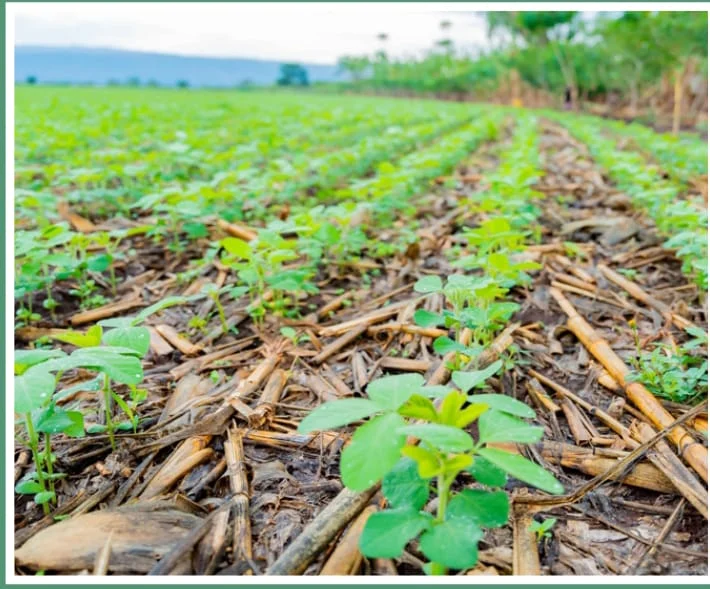
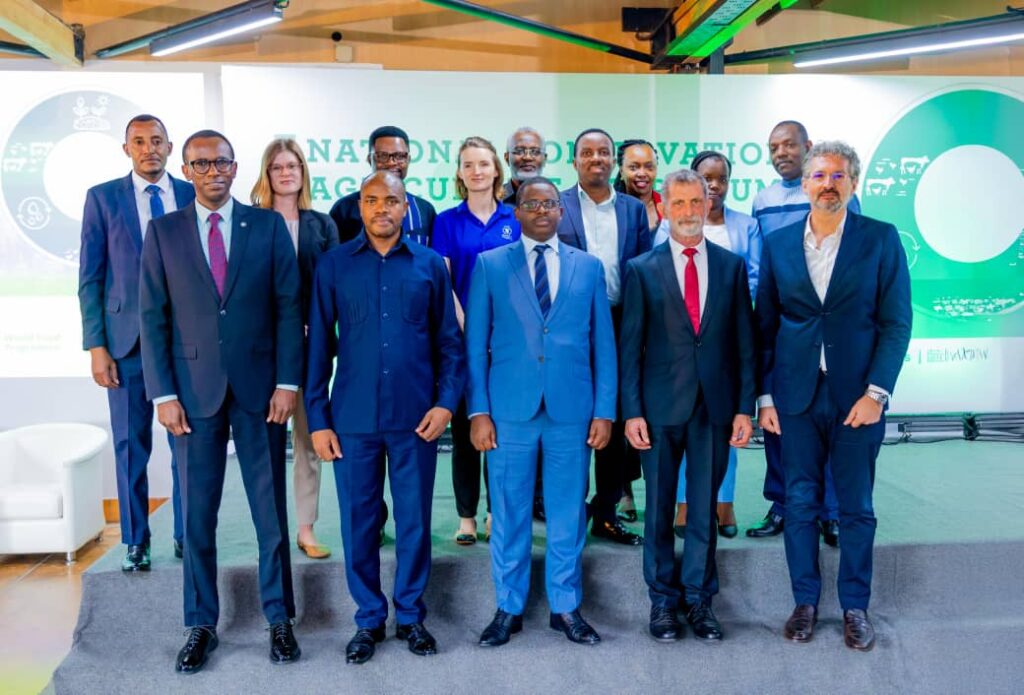
At a time when climate change continues to threaten food systems across the globe, Rwanda has stepped up with a transformative approach to agriculture that emphasizes soil conservation, sustainability, and long-term food security. At the beginning of April, the Rwanda Institute for Conservation Agriculture (RICA), in collaboration with the Ministry of Agriculture and Animal Resources (MINAGRI), the Mennonite Central Committee (MCC), and the World Food Programme (WFP), convened the first-ever National Conservation Agriculture Symposium.
Held on RICA’s campus, the symposium brought together experts, policymakers, development partners, private sector actors, and professional farmers to reimagine the future of agriculture in Rwanda—one where land remains fertile without being constantly plowed.
Dr. Ndambe Nzaramba Magnifique, RICA’s Deputy Vice Chancellor in charge of Research and Conservation Agriculture Extension, underscored the urgency of conserving Rwanda’s increasingly fragile soils. “We need to protect the land by leaving crop residues in the field after harvest, practicing crop rotation, and avoiding over-tilling,” he said. He noted that minimal tilling and the use of ground cover can increase biodiversity in the soil, improve water retention, and dramatically reduce erosion.
Instead of turning fertile plots into barren fields before each planting season, conservation agriculture encourages farmers to leave the land covered with plant matter and to disturb the soil as little as possible. This approach is now being used in several parts of the country with promising results.
Women, who form the backbone of Rwanda’s agricultural workforce, stand to benefit the most. Jonas Gakuba, a farmer from Nasho Sector in Kirehe District, shared that this method reduces labor intensity and input costs. “We no longer need to dig every part of the field,” he said. “The soil retains more nutrients, and our crops yield more.”
The government’s goal, according to Dr. Patrick Karangwa, Director General for Agricultural Modernization at MINAGRI, is to reach 100,000 hectares under conservation agriculture by 2029. Currently, around 1,100 hectares are under this method. “Our ambition is to scale this by at least 100 times,” he said.
The symposium emphasized that the conservation model isn’t just good for food production; it’s also vital in combating climate change. An alarming 45% of Rwanda’s land is at risk of erosion, with an estimated 27 million tons of topsoil lost each year. By promoting sustainable land management practices, Rwanda aims to protect not only its natural resources but also the livelihoods that depend on them.
Development partners have pledged their support. MCC’s Thomas Habanabakize highlighted how field schools have trained thousands of farmers in conservation practices. Meanwhile, WFP’s Richard Makuza noted that over 127,000 smallholder farmers supported by the organization have improved their yields through conservation-friendly farming.
As Rwanda races to adapt to climate uncertainties, the commitment to regenerative agriculture offers a hopeful blueprint for the region and beyond. By preserving soil and boosting yields sustainably, conservation agriculture may just be the future of farming—not only in Rwanda but across Africa.
By Jean de Dieu Nduwayezu: SECOTO Magazine EAC’s Chief Editor