

By Nduwayezu Jean de Dieu
October 30 ,2025
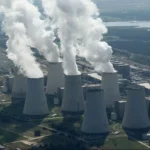
The World Health Organisation (WHO) and its global partners have sounded an urgent alarm to world leaders: prioritise public health as the cornerstone of climate action—or face escalating human and economic losses across the planet.
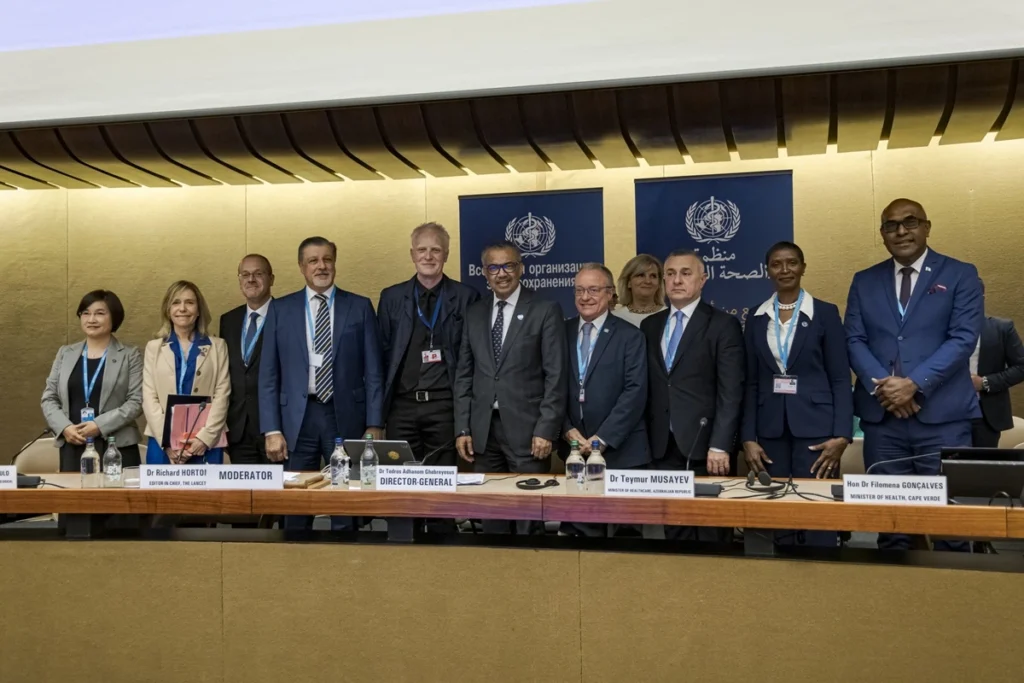
In a stark new report, the 2025 Lancet Countdown on Health and Climate Change, released on Wednesday in collaboration with WHO, researchers warned that the world’s continued dependence on fossil fuels and sluggish adaptation measures are already inflicting severe damage on health, economies, and ecosystems worldwide. The report revealed that twelve of twenty key health indicators tracked by the Lancet Countdown have reached record highs directly linked to climate inaction. The evidence paints a sobering picture: climate inaction is costing lives, straining health systems, and destabilising economies at an accelerating rate.
Jeremy Farrar, WHO’s Assistant Director-General for Health Promotion, didn’t mince words: “The climate crisis is fundamentally a health crisis. Every fraction of global warming directly endangers lives and livelihoods.” Farrar emphasised that while climate inaction is already claiming lives in every country, decisive climate action offers immense health benefits—from cleaner air and healthier diets to resilient, sustainable healthcare systems.
The data is alarming. Heat-related mortality has surged 23 per cent since the 1990s, now responsible for 546,000 deaths annually. In 2024, the average person endured sixteen days of dangerous heat, a number set to rise without urgent mitigation. Heatwaves and droughts drove food insecurity for 124 million people in 2023, while heat exposure cost 640 billion labour hours—a productivity loss valued at $1.09 trillion. Adding to the contradiction, governments collectively spent $956 billion subsidising fossil fuels in 2023—three times more than the amount pledged to support climate-vulnerable nations. Astonishingly, fifteen countries spent more on fossil fuel subsidies than on their entire national health budgets.
Despite the grim statistics, the report highlights signs of progress. Between 2010 and 2022, renewable energy grew to 12 per cent of global electricity generation, supporting 16 million jobs and preventing 160,000 premature deaths annually through reduced coal pollution. Marina Romanello, Executive Director of the Lancet Countdown at University College London, stressed that solutions already exist—and are proving effective. “Rapidly phasing out fossil fuels in favour of renewable energy and sustainable food systems could save over ten million lives each year,” she said. Romanello noted that while national commitments have lagged, cities and health systems are taking the lead, with nearly all surveyed cities having completed or initiated climate risk assessments to protect public health.
The health sector itself is also stepping up. According to WHO data, 58 per cent of member states have completed Health Vulnerability and Adaptation Assessments, and 60 per cent have finalised Health National Adaptation Plans—key steps toward climate-resilient healthcare. Romanello added that the shift to cleaner energy is generating healthier jobs and economic growth, while health-related greenhouse gas emissions dropped 16 per cent between 2021 and 2022, improving both care quality and sustainability.
As the world prepares for COP30 in Belém, Brazil, the 2025 Lancet Countdown findings serve as a critical call to action. WHO and its partners argue that placing health at the centre of climate policy is not just moral—it’s strategic. “Climate action is health action,” Farrar concluded. “By protecting the planet, we protect our people.” The upcoming Belém Action Plan is expected to outline a new global framework for integrating health into national climate commitments—an opportunity for nations to redefine what progress truly means.
As the data grows more urgent, the world must abandon the false trade-off between economic growth and environmental health. The future of public health depends on the energy choices made today.
© 2025 SECOTO Magazine — Inspiring sustainable futures through informed journalism.